2025 Global Outlook for Plastic Blow Molding Industry - Smart Manufacturing, Energy Efficiency, and Sustainability
The plastic blow molding industry is entering a pivotal stage in 2025. With global manufacturers focusing on smart factories, automation, and sustainable production, procurement teams and business owners face new opportunities and challenges. Choosing the right blow molding technology is no longer just about cost—it’s about aligning with efficiency, environmental responsibility, and long-term ROI.
The Rise of Smart Factories in Blow Molding
The integration of smart manufacturing is reshaping the blow molding sector. From IoT-enabled monitoring to predictive maintenance, manufacturers can now ensure higher uptime and improved product consistency.
- IoT Sensors and Data Analytics: Real-time monitoring helps identify production bottlenecks and reduce unplanned downtime.
- AI-driven Process Control: Advanced algorithms automatically adjust parameters for precision and energy savings.
- Remote Access & Cloud Integration: Production managers and buyers gain visibility into performance metrics across multiple sites.
➡ For procurement managers, investing in blow molding machines with smart factory compatibility means reduced operational risk and enhanced scalability.
Automation Trends Driving Efficiency
In 2025, automation is no longer optional—it is the industry standard. Blow molding machines equipped with robotic handling, automatic mold changes, and integrated inspection systems help companies reduce labor costs and minimize errors.
Key Benefits of Automation in Blow Molding
- Faster Production Cycles: Robotics streamline packaging and bottle transfer, cutting downtime.
- Quality Assurance: Vision systems ensure defect-free output, reducing material waste.
- Labor Optimization: Less reliance on manual intervention lowers long-term operating costs.
Automation ensures consistent quality output that meets global standards, making it easier to enter or expand into regulated markets such as pharmaceutical packaging, food & beverage, and consumer goods.
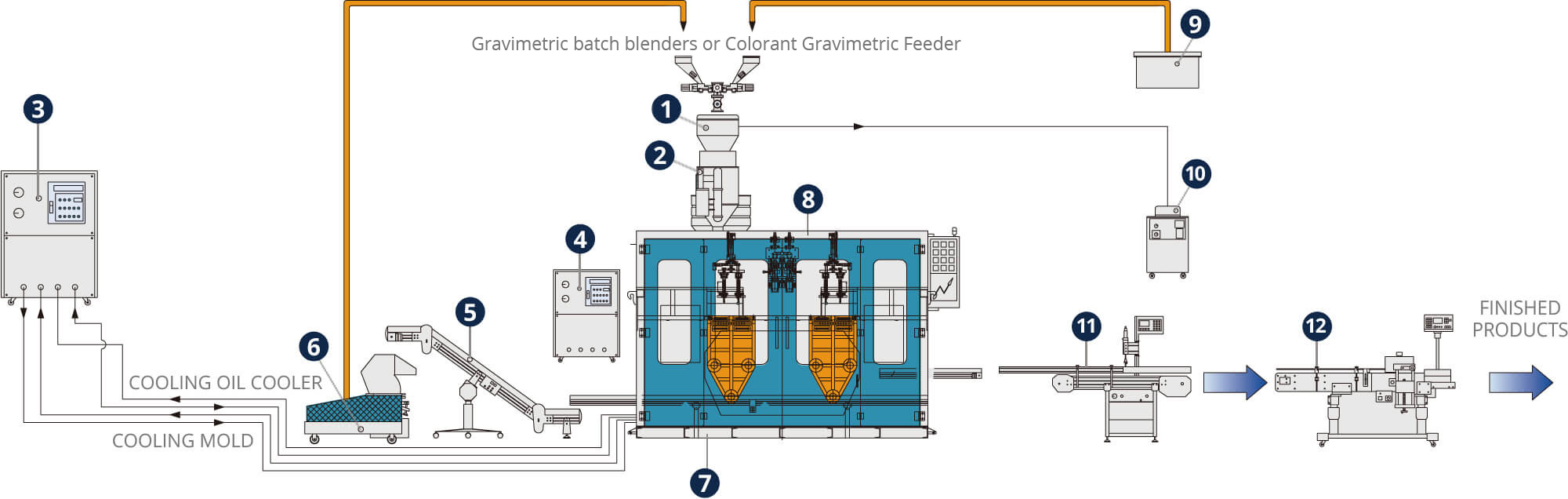
Sustainability and Energy-Saving in Blow Molding
Global regulations and customer demand are pushing manufacturers toward sustainable plastic production. Blow molding machines are adapting with advanced energy-saving features and compatibility with eco-friendly materials.
How Blow Molding Supports Sustainability in 2025
- Energy-Efficient Heating Systems: New infrared and induction heating technologies lower electricity consumption by reducing start-up times and improving thermal transfer efficiency.
- Servo-Driven Components: Replacing hydraulic systems with servo motors significantly cuts energy usage and improves machine precision.
- Closed-Loop Cooling Systems: Water recycling units and optimized air flow reduce overall cooling energy demand.
- Recyclable & Bio-Based Materials: Machines are increasingly designed to process PET, rPET, and bio-based polymers without compromising cycle times or product strength.
- Lightweighting Technology: Advanced mold design produces thinner yet durable bottles, cutting raw material consumption and shipping costs.
Why Sustainability Matters for You
For procurement managers, sustainability is not only a compliance requirement but also a market differentiator. Brands in food, beverage, and healthcare sectors are under pressure to reduce carbon footprints and meet ESG commitments. Investing in blow molding equipment that supports eco-friendly materials and consumes less power helps meet these goals while lowering total cost of ownership (TCO).
Regulatory and Market Drivers
- The EU Packaging and Packaging Waste Regulation (PPWR) requires higher recycled content in plastic bottles by 2030.
- Large FMCG brands such as Coca-Cola and Nestlé have set ambitious 100% recyclable or reusable packaging targets, pushing suppliers to adopt compatible machinery.
- In Asia and North America, consumer preference for eco-conscious packaging is accelerating adoption of bio-based and recycled plastics.
Future Outlook: Smarter Energy Management
Looking ahead, blow molding machines will integrate with factory-wide energy management systems. AI-driven optimization will analyze energy consumption patterns, automatically adjusting parameters for heating, cooling, and air pressure. These advancements will not only save energy but also provide data transparency for sustainability reporting.
This means selecting a blow molding machine today is also an investment in regulatory compliance, corporate reputation, and long-term operational savings.
According to Plastics Today, sustainability is now a core driver of machinery innovation, with energy savings of up to 30% in the latest blow molding systems.
Strategic Investment Insights for 2025
For buyers and procurement specialists, 2025 is the year to align equipment purchases with long-term sustainability goals and operational efficiency.
Key Takeaways for Decision-Makers
- Choose machines with AI-driven automation to future-proof operations.
- Ensure compatibility with sustainable materials like rPET and bio-based plastics.
- Prioritize energy-saving systems to reduce total cost of ownership.
- Partner with suppliers who offer after-sales service and digital support tools.
Investing in intelligent, eco-conscious blow molding solutions helps businesses stay competitive while meeting global environmental compliance.
Final Thoughts: Positioning Your Business for the Future
The plastic blow molding industry in 2025 is defined by smart technology, automation, and sustainability. For B2B buyers, these trends represent more than innovation—they are strategic imperatives. Selecting the right blow molding equipment ensures reduced costs, improved efficiency, and alignment with sustainability mandates.
Companies that adopt these technologies early will not only meet customer expectations but also gain a strong competitive edge in global markets.
✅ Looking to upgrade your production line with advanced blow molding machines?
Our solutions are designed for energy efficiency, automation, and sustainable production, helping your business thrive in 2025 and beyond. Contact PARKER today to explore tailored solutions for your industry needs.